REPORTED
The Ulam Economy
The stalls, carinderias, and delivery routes that keep workers fed across every shift — and the small economics holding the whole system together.
FOOD & LANGUAGE
What a Carinderia Actually Does
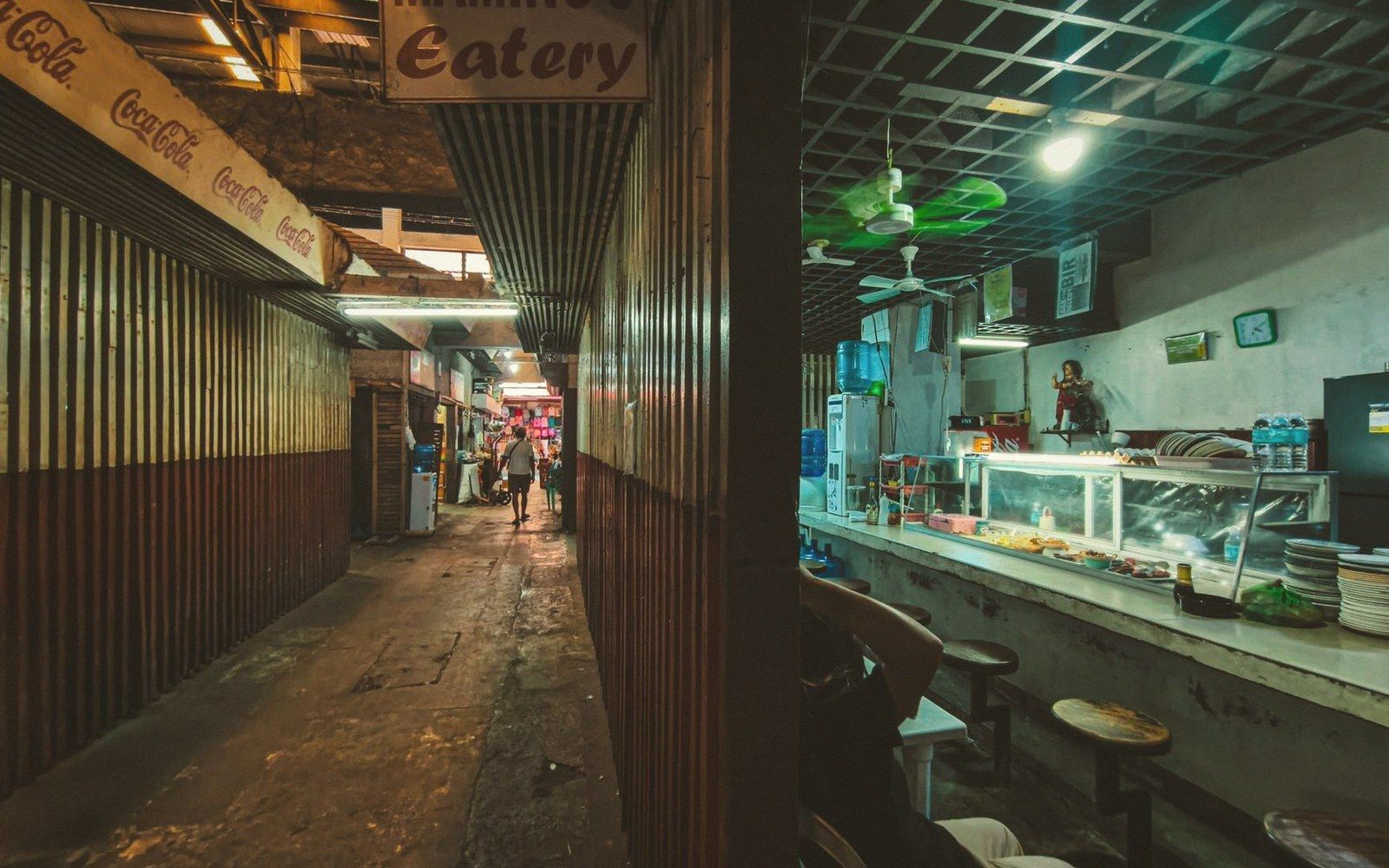
Ulam means the main dish — the viand that goes alongside rice. But in the context of Philippine working life, it implies the whole infrastructure of affordable cooked food that makes shift work survivable. A worker clocking in at eleven at night and clocking out at eight in the morning does not eat on a restaurant schedule. The carinderia — a small, usually family-run eatery with trays of pre-cooked dishes behind glass or under mesh — is the institution that solved this problem long before BPOs existed.
The model is simple and it works. A handful of dishes cooked in bulk, portioned over rice, paid for in cash at the counter. Adobo, sinigang, pinakbet, paksiw, kare-kare on good days. The price point is calibrated to the worker, not the tourist or the corporate diner. In areas around call center hubs — the strips near Eastwood in Quezon City, the side streets behind IT Park in Cebu, the blocks flanking Abreeza in Davao — carinderias cluster by necessity. They know the shift window. The serious ones open before midnight and run until mid-morning, catching both the outgoing night crowd and the incoming day shift.
The economics for the carinderia owner are tight but legible. Volume is everything; margin per tray is thin. Waste is the real enemy, which is why experienced operators cook conservatively and replenish rather than cook once and hold. A stall that misjudges volume loses money; one that runs out too early loses customers to the competition across the street. The balance is learned over years, passed down within families, and not easily replicated by a chain.
The Delivery Layer
Grab Food and Foodpanda changed the geography of the ulam economy without replacing its core logic. For workers in high-rises or gated compounds, or for the freelancer who did not leave the apartment that day, platform delivery made carinderia food accessible without the walk. But the economics shifted. Delivery fees, platform cuts, and minimum order requirements can price a single-serving ulam purchase out of viability for a budget-conscious worker. The practical response was group orders — a floor team coordinates a single delivery from one stall, splits the fee, each person picks their dish.
In cities with strong BPO clusters, delivery riders know the schedule as well as the workers do. Night-shift peaks hit between 1 a.m. and 3 a.m. in areas like BGC and Ortigas. Riders who work those windows earn more on surge pricing and tips; it is its own shift economy running parallel to the office one. Some carinderia operators in Metro Manila run a hybrid: walk-in counter during early morning, delivery-only from midnight to two, closing briefly before the day shift crowd arrives. The adaptation is constant.
Provincial cities operate differently. In Bacolod, where the BPO footprint is real but the density is lower, the carinderia is still more dominant than the app. Streets around the commercial areas that house call centers keep late-night food stalls running on foot traffic alone. The delivery infrastructure exists but is thinner; the walk to the nearest open stall is still the default for many workers. In Davao, the night market culture along Roxas Avenue offers a different kind of variety at late hours — more public, more social, filling a role the carinderia fills privately in other cities.
What the System Costs and What It Covers
A full meal — rice, one ulam, sometimes a small soup or a drink — runs in a range that shifts depending on city and stall. Metro Manila carinderias near BPO zones tend to price slightly above those in the provinces, reflecting rent and proximity to workers with more disposable income. The budget is still modest by any comparison, but for a worker buying two meals a day during a stretch of overnight shifts, it accumulates. Some BPO companies provide subsidised canteens or meal allowances built into the compensation package; for those workers, the carinderia is a supplement rather than the primary source. For independent contractors working from home or a co-working space, the ulam economy is entirely self-funded and entirely essential.
What the system covers, beyond calories, is continuity. The night shift does not pause for hunger. The worker who can grab a tray in ten minutes and eat at their station — or have a delivery arrive during break — stays functional in a way that someone who cannot solve the food problem simply does not. The carinderia owner, the delivery rider, the stall that opens at midnight: they are all part of the same operating system. The work that happens in glass towers at 2 a.m. runs, in part, on ulam economies that nobody puts in the annual report.